Planning a cross-country road trip or driving hundreds of miles on open highways can quickly turn from an exciting adventure into a painful ordeal if you do not have the right vehicle. When searching for the best car for long drive in 2026, looking strictly at engine horsepower or basic city fuel efficiency is simply not enough. You need a vehicle that prioritizes seat ergonomics, cabin noise insulation, adaptive suspension tuning, long-range efficiency, and active driver assistance systems.
In this ultimate highway buying guide, we break down what truly makes a vehicle comfortable over long distances, evaluate key technical specifications, and review top sedans, SUVs, and electric vehicles designed to deliver a fatigue-free driving experience for both drivers and passengers.
What Makes the Best Car for Long Drive in 2026?
Before shortlisting specific models, it is essential to understand the core engineering factors that separate an average daily urban commuter from a true highway cruiser. Many buyers focus exclusively on infotainment screens or exterior styling, only to realize after three hours on the interstate that their seats lack lumbar support or that road noise causes severe headaches.
1. Low NVH Levels (Noise, Vibration, & Harshness)
Engine noise, wind turbulence around side mirrors, and tire hum over coarse asphalt cause significant mental and physical fatigue over a 4- to 8-hour drive. Top-tier highway cars feature acoustic laminated windshields, triple-sealed door rubber, active noise cancellation (ANC), and dense sound-dampening insulation under the wheel arches.
2. Advanced Seat Ergonomics & Multi-Contour Adjustment
Long-distance driving puts immense strain on your lower back, hamstrings, and neck. The best car for long drive in 2026 should offer 8-way to 16-way power-adjustable driver seats with adjustable lumbar support, seat cushion extension, and optional ventilation to prevent sweat build-up during summer road trips.
3. Adaptive Driver Assistance Systems (ADAS Level 2)
Fatigue is the biggest danger on open highways. Modern ADAS technologies such as Adaptive Cruise Control with Stop & Go, Lane Centering Assist, Blind Spot Monitoring, and Driver Attention Monitoring drastically reduce physical and cognitive workload by managing speed and keeping the vehicle centered within lane markings.
4. Long Wheelbase & Suspension Tuning
Vehicles with a longer wheelbase naturally offer superior high-speed stability over highway undulations. Combined with well-damped suspension setups that absorb sharp expansion joints without excessive body roll, a longer wheelbase prevents vertical pitching and motion sickness for rear passengers.
5. Cruising Range & Fuel Efficiency
Frequent refueling stops interrupt trip momentum and waste valuable travel time. A true long-drive vehicle should offer a cruising range of 400 to 600 miles on a single tank of gas or hybrid charge, allowing you to drive long stretches uninterrupted.
Quick Comparison: Top Highway Cruisers in 2026
| Vehicle Model | Vehicle Type | Real-World Range / Fuel Efficiency | Key Comfort & Highway Feature |
|---|---|---|---|
| Toyota Camry Hybrid | Midsize Sedan | Up to 51 MPG Highway / 600+ Miles Range | Outstanding NVH isolation & bulletproof reliability |
| Honda Accord Hybrid | Midsize Sedan | Up to 48 MPG Highway / 550+ Miles Range | Class-leading rear legroom & Google built-in tech |
| Subaru Outback | Crossover Wagon | Up to 32 MPG Highway / 500+ Miles Range | Standard Symmetrical AWD & plush 8.7-inch clearance |
| Kia Telluride | 3-Row Midsize SUV | Up to 26 MPG Highway / 480+ Miles Range | Quietest cabin in class with ventilated 2nd-row seats |
| Hyundai Ioniq 6 | Electric Sedan | Up to 361 Miles Range / 18-min Fast Charge | Streamlined aerodynamics & ultra-quiet EV operation |
| Lexus ES 350 / 300h | Luxury Midsize Sedan | Up to 44 MPG Highway / Mark Levinson Audio | Ultra-plush ride quality & whisper-quiet cabin |
| Volvo V90 Cross Country | Luxury Crossover | Up to 29 MPG Highway / Advanced Orthopedic Seats | World-renowned seat ergonomics & safety tech |
Detailed Reviews: The Best Cars for Long Drive in 2026
1. Toyota Camry Hybrid – Fuel Efficiency & Reliability
The Toyota Camry Hybrid continues to stand out as a top option for long-distance drivers who prioritize unbeatable fuel savings, long-term mechanical reliability, and comfortable highway manners.
- Performance & Range: Powered by Toyota’s 5th-generation hybrid powertrain (2.5-liter 4-cylinder paired with electric motors), it generates up to 225 horsepower while delivering up to 51 MPG on open highways. With a 13-gallon fuel tank, you can comfortably travel over 600 miles between gas station stops.
- Why It Excels for Long Drives: Toyota has refined the suspension architecture to strike an ideal balance between firm high-speed tracking and plush bump absorption. The standard Toyota Safety Sense 3.0 suite features smooth adaptive cruise response, preventing jerky braking when slower traffic cuts into your lane.
- Pros:
- Incredible real-world fuel economy (600+ mile range)
- Low long-term maintenance and repair costs
- Intuitive dashboard controls that minimize driver distraction
- Cons:
- Engine can sound noisy under hard full-throttle acceleration
- Sedan ride height lacks the elevated road view of an SUV
2. Honda Accord Hybrid – Interior Refinement & Driving Dynamics
For drivers who want a slightly more engaging steering feel combined with luxury-level cabin noise isolation, the Honda Accord Hybrid is a top contender in the midsize sedan category.
- Performance & Range: Featuring a 2.0-liter two-motor hybrid system producing 204 horsepower and 247 lb-ft of torque, the Accord delivers rapid highway merging power alongside an impressive 48 MPG highway rating.
- Why It Excels for Long Drives: The Accord offers class-leading rear legroom (40.8 inches), making it perfect for adult passengers sitting in the back for hours. The front body-stabilizing seats reduce pelvic tilt and spinal strain. Additionally, noise-canceling alloy wheels and acoustic glass keep cabin sound levels remarkably low.
- Pros:
- Ultra-spacious rear seats suitable for tall adults
- Extremely smooth hybrid powertrain transitions
- Excellent high-speed straight-line stability
- Cons:
- Rear seats do not offer optional heating on lower trims
- Slightly lower overall highway range compared to Camry Hybrid
3. Subaru Outback – Best Crossover for Long Trips & Off-Pavement Travel
If your long road trips involve mountain passes, snow-covered highways, dirt roads, or camping gear, the Subaru Outback provides station-wagon comfort with the rough-road capability of an SUV.
- Performance & Range: Available with either a 2.5-liter naturally aspirated engine (32 MPG Highway) or a punchier 2.4-liter Turbocharged engine (260 hp). Combined with an 18.5-gallon fuel tank, it effortlessly covers 500+ miles on a single fill-up.
- Why It Excels for Long Drives: Featuring 8.7 inches of ground clearance and standard Symmetrical All-Wheel Drive, the Outback handles poor weather conditions with supreme confidence. Its suspension travel is tuned to glide smoothly over potholes, frost heaves, and unpaved roads without jarring occupants.
- Pros:
- Exceptional all-weather traction and stability
- Huge cargo capacity (75.6 cu ft with seats folded)
- Roof rails rated for heavy cargo containers or kayaks
- Cons:
- Continuously Variable Transmission (CVT) feels sluggish during spirited driving
- Touchscreen menu layout can require multiple taps for simple climate adjustments
4. Kia Telluride – Best 3-Row Family SUV for Road Trips
When traveling with 5 to 7 passengers alongside heavy luggage, midsize sedans run out of space quickly. The Kia Telluride remains a premier contender when choosing the best car for long drive in 2026 for families.
- Performance & Range: Powered by a robust 3.8-liter V6 engine producing 291 horsepower and 262 lb-ft of torque, mated to a smooth 8-speed automatic transmission. It yields up to 26 MPG highway.
- Why It Excels for Long Drives: The Telluride punches well above its price tag in luxury and insulation. First and second-row passengers can enjoy heated and ventilated seats, while dual sunroofs create an open, airy cabin environment. QuietMode audio controls allow drivers to mute rear speakers so sleeping kids are not woken up by music or navigation prompts.
- Pros:
- Generous 3rd-row legroom for teens and adults
- Premium interior materials rivaling luxury brands
- Outstanding Highway Driving Assist (HDA 2) system
- Cons:
- V6 engine is thirstier than hybrid competitors
- Large footprint makes tight urban parking trickier
5. Hyundai Ioniq 6 – Best Electric Vehicle (EV) for Long Highway Drives
Many buyers worry about taking electric cars on long drives, but the Hyundai Ioniq 6 solves range anxiety with ultra-sleek aerodynamics and industry-leading fast-charging tech.
- Performance & Range: Offers an EPA-estimated range of up to 361 miles in Long Range RWD configuration, achieving an extraordinary drag coefficient of just 0.21.
- Why It Excels for Long Drives: Built on an 800V E-GMP architecture, the Ioniq 6 can charge from 10% to 80% in just 18 minutes at a 350kW DC fast charger. A quick 15-minute bathroom and coffee break adds roughly 200 miles of highway range. The EV platform also delivers dead-silent operation with zero engine vibration.
- Pros:
- Ultra-fast DC charging capability reduces downtime
- Near-silent cabin at high highway speeds
- Instant electric torque for effortless merging and passing
- Cons:
- Rear headroom is tight for tall adults due to the sloped roofline
- Fast-charging infrastructure can still be inconsistent in rural regions
6. Lexus ES 300h – Ultimate Luxury Highway Cruiser
For long-distance commuters who want maximum luxury, plush ride quality, and low fuel bills without spending six figures, the Lexus ES 300h hybrid is unmatched.
- Performance & Range: 2.5-liter hybrid engine delivering 215 total horsepower and up to 44 MPG highway.
- Why It Excels for Long Drives: The Lexus ES is specifically engineered for velvet-smooth ride quality. Its suspension completely isolates the cabin from harsh road imperfections, while double-pane acoustic glass creates a serene environment. Paired with the optional 17-speaker Mark Levinson premium audio system, long drives become genuinely relaxing.
- Pros:
- Ultra-comfortable seats engineered for zero fatigue
- Exceptionally quiet luxury cabin
- Proven long-term Lexus reliability and resale value
- Cons:
- Rear seats do not fold down (only a pass-through slot)
- Less sporty handling compared to European rivals
Essential Long-Drive Pre-Trip Vehicle Checklist
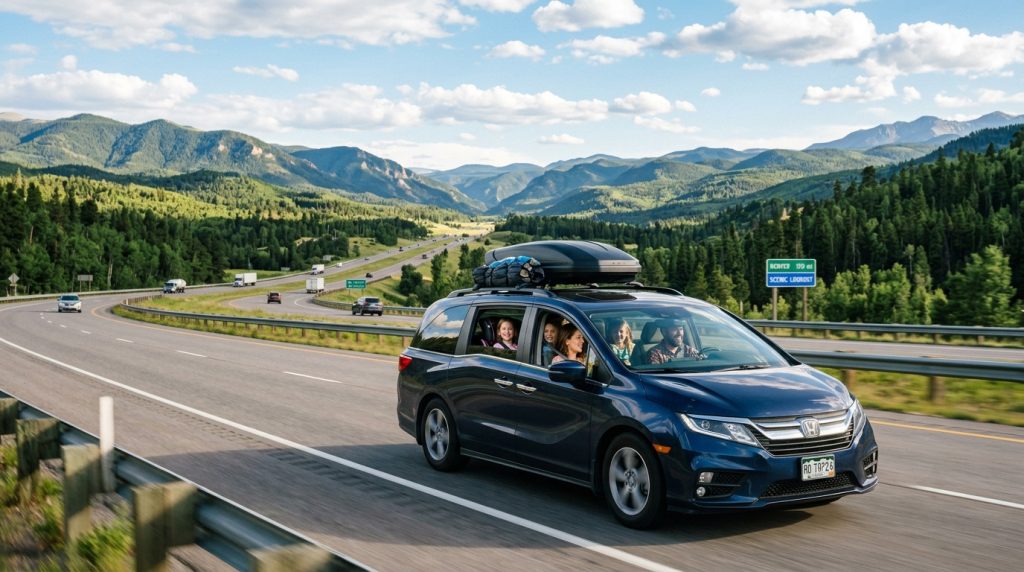
Even the most comfortable car on paper can turn into a nightmare if maintenance is neglected before hitting the interstate. Always run through this 5-point inspection before departing:
- Inspect Tire Pressure & Tread Depth: Cold morning temperature drops cause tire pressure losses. Underinflated tires generate excessive friction heat at 70+ mph, leading to catastrophic blowouts and poorer fuel economy. Ensure tires are inflated to the recommended PSI on your driver’s door jamb.
- Check Fluid Levels: Verify engine oil, coolant/antifreeze, brake fluid, and windshield washer fluid. High-speed driving in hot summer weather puts increased stress on cooling systems.
- Examine Brake Pads: Ensure brake pads have at least 4mm to 5mm of friction material remaining. Highway panic stops require crisp pedal response.
- Test Wiper Blades & Headlights: Clean, streak-free wiper blades and properly aimed headlights are essential for nighttime driving and sudden rainstorms.
- Pack an Emergency Highway Kit: Always carry a portable jump-starter pack, tire inflator pump, first-aid kit, flashlight, gallon of water, and basic hand tools.
How to Choose the Right Vehicle for Your Needs
Selecting the ideal highway vehicle comes down to matching your primary driving scenarios with the right body style:
- Choose a Midsize Hybrid Sedan (Camry / Accord) if your primary goals are saving money on fuel, easy maneuvering, and low maintenance costs over hundreds of thousands of miles.
- Choose an All-Wheel Drive Wagon or Crossover (Subaru Outback) if you regularly drive through rain, snow, mountain terrain, or unpaved dirt roads to reach outdoor destinations.
- Choose a 3-Row Midsize SUV (Kia Telluride) if you travel frequently with 4 or more family members, pets, and large quantities of luggage.
- Choose an Aerodynamic EV (Hyundai Ioniq 6) if you have access to fast-charging corridors and want the quietest driving experience possible.
Before finalizing your decision, you can also review official highway vehicle crash tests and safety scores via the IIHS Safety Ratings database.
Frequently Asked Questions (FAQs)
What is considered a long drive for a car?
A drive exceeding 3 to 4 hours of continuous travel (or over 200 miles in a single stint) is generally considered a long-distance drive. At this threshold, seat ergonomics, driver-assist systems, and low NVH levels become far more critical than short-trip city agility.
Are sedans or SUVs better for long drives?
Sedans generally offer better fuel economy, lower wind noise, and superior high-speed handling due to their lower center of gravity. However, SUVs provide a higher seating position for better forward visibility, more interior legroom, higher ground clearance, and greater cargo versatility.
How often should you stop and take a break during a long drive?
Road safety experts and health professionals recommend stopping every 2 hours or every 100 to 120 miles. Taking a 15-minute break to stretch your legs, hydrate, and rest your eyes prevents fatigue-related accidents and improves circulation. Finding the best car for long drive in 2026 combined with proper breaks guarantees a safe, enjoyable journey.