If your car struggled to start this morning, or the dashboard lights flickered for a second before the engine caught, you’re probably here to find out how long does a car battery last and how much life yours has left.
The short answer is that most car batteries last 3 to 5 years. But that number hides a lot of nuance. The real answer depends on where you live, how you drive, and what kind of battery is under your hood. Let’s break it down properly.
The Quick Answer
On average, a standard lead-acid car battery lasts 3 to 5 years, or roughly 30,000 to 50,000 miles of typical driving this is the most common answer to how long does a car battery last, but the real number swings based on a few factors we’ll cover below. Some batteries die at the 2-year mark, while others especially AGM (Absorbent Glass Mat) batteries in newer vehicles can push past 6 years if they’re well maintained.
There’s no single “expiration date” printed on a car battery. Instead, it’s a slow decline. One day it starts your car fine. A few weeks later, it cranks a little slower. Then, on a cold morning, it just doesn’t have enough juice left. If you’re shopping for a practical vehicle that won’t give you frequent electrical headaches to begin with, take a look at our complete guide on the best family cars.
There’s also a common misconception worth clearing up: a battery’s cold cranking amps (CCA) rating and its lifespan are two different things. CCA measures how much power the battery can deliver in a short burst when it’s cold — it tells you how well the battery will perform, not how many years it will last. A battery can have a high CCA rating and still die in three years if it’s been through enough heat cycles or short trips.
What Actually Determines a Battery’s Lifespan?
A car battery isn’t just “good” or “dead.” Its lifespan is shaped by a handful of real, measurable factors:
1. Climate
Heat is the number one killer of car batteries even more than cold. High temperatures speed up the chemical reactions inside the battery and evaporate the internal fluid faster than normal. If you live in a hot climate, don’t be surprised if your battery taps out closer to the 2-to-3-year mark.
Cold weather doesn’t shorten a battery’s life as directly, but it exposes underlying weaknesses. If you live somewhere with severe winters, check out our recommendations on the best trucks for snow and winter driving to make sure your whole electrical system holds up in freezing temperatures.
2. Driving Habits
Short trips are much harder on a car battery than long highway drives. Every time you start your engine, the battery dumps a big burst of energy and needs time afterward to recharge fully via the alternator. If most of your trips are quick grocery runs, your battery may never reach a full recharge cycle.
Vehicles that sit unused for weeks suffer from slow self-discharge, eventually dropping to a level where the battery struggles to recover. If you’re dealing with a higher-mileage vehicle, our guide on hybrid and vehicle maintenance after 100,000 miles covers this in more detail.
3. Battery Type
| Battery Type | Typical Lifespan | Common In |
|---|---|---|
| Standard Flooded Lead-Acid | 3–5 years | Older and budget vehicles |
| AGM (Absorbent Glass Mat) | 4–7 years | Newer vehicles, start-stop systems |
| EFB (Enhanced Flooded Battery) | 4–6 years | Mild hybrids, start-stop systems |
| Lithium-Ion (12V) | 8–12 years | High-end EVs, performance builds |
4. Electrical Load
Modern cars run far more electronics than they used to infotainment screens, heated seats, sensors, dash cams, and phone chargers that stay plugged in around the clock. All of that draws power even when the engine is off, and it adds cumulative strain to the battery over its lifetime. A car loaded with aftermarket electronics will typically wear its battery down faster than a stripped-down base model with the same age and mileage.
5. Maintenance and Installation
Corrosion on the terminals, a loose connection, or a battery that isn’t securely mounted (so it vibrates while driving) can all shorten lifespan significantly. This is really the one factor on this list you have direct control over a five-minute terminal cleaning every few months costs nothing and can meaningfully extend how long the battery holds a full charge.
How Different Battery Types Handle Weather
Not every battery reacts to climate the same way, which is worth knowing before you assume yours is simply “old.”
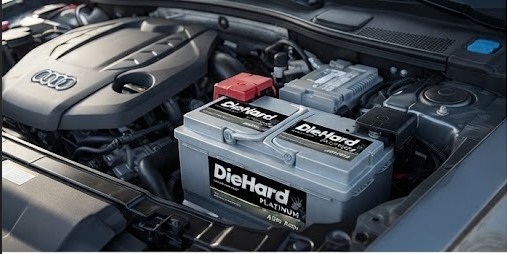
Standard flooded lead-acid batteries are the most sensitive to heat because their liquid electrolyte evaporates fastest under high temperatures. AGM batteries, being sealed and pressurized, hold up noticeably better in both heat and cold, which is part of why manufacturers use them in vehicles with start-stop technology that cycles the battery constantly. EFB batteries sit in between — better than standard flooded batteries in stop-start conditions, but not quite as heat-resistant as AGM. Lithium-ion 12V batteries, still uncommon outside high-end or performance vehicles, tolerate temperature swings the best of all, though they come with a much higher price tag.
If you’ve replaced your battery once already and it died faster than expected, it’s worth checking whether the replacement matched your car’s original specification. Installing a cheaper flooded battery in a car designed for AGM (common in many newer vehicles with start-stop) can cut its expected lifespan considerably.
Signs Your Car Battery Is Dying
You usually get warning signs before a battery fails completely. Watch for:
- Slow engine crank the engine takes longer to turn over than usual
- Dashboard battery warning light illuminated unexpectedly
- Dim headlights or interior lights, especially when idling at a stoplight
- A clicking sound when turning the key, but the engine fails to crank
- A swollen or misshapen battery case caused by extreme heat damage
- Heavy corrosion buildup around the positive and negative terminals
- Needing a jump-start more than once within a short stretch of time
If you notice two or more of these at once, it’s worth getting the battery tested rather than waiting for it to strand you somewhere inconvenient.

How to Test Your Car Battery Yourself
You don’t always need a mechanic for a basic check. Most auto parts stores will test your battery for free in a few minutes.
If you prefer to check it yourself with a multimeter:
- Turn off the engine and let the car sit for a few minutes.
- Set your multimeter to DC volts.
- Touch the red probe to the positive terminal and the black probe to the negative terminal.
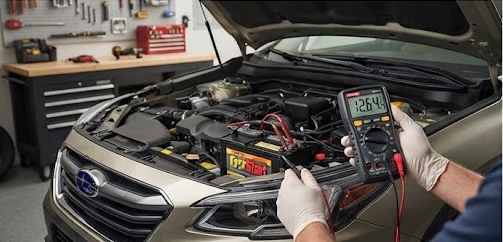
- A healthy, fully charged battery should read 12.6 volts or higher.
- Anything below 12.4 volts indicates a loss of charge, while readings below 12.0 volts mean the battery is in critical condition.
Start the engine and check the voltage again you should see a reading between 13.7 and 14.7 volts, which confirms the alternator is charging the battery properly. If the number stays close to 12.6 volts even with the engine running, the alternator itself may be the problem rather than the battery.
For further official technical references, you can review vehicle efficiency standards from the U.S. Department of Energy’s Alternative Fuels Data Center, or check brand reliability scores on Consumer Reports.
What a Replacement Actually Costs
Prices vary a lot depending on battery type and where you buy it, but as a general guide:
- Standard flooded lead-acid batteries typically run $80 to $150
- AGM batteries usually cost $150 to $280
- EFB batteries fall around $120 to $200
- Lithium-ion 12V batteries can run $300 to $900, depending on capacity
Most auto parts stores will install the battery for free if you buy it from them, which saves a trip to a mechanic for what’s normally a 10-minute job. If your car has advanced start-stop or safety systems, some dealerships recommend a battery registration or reset procedure after replacement worth asking about before you leave the lot.
How to Make Your Car Battery Last Longer
A few simple habits can easily add a year or more to your battery’s life:
- Drive regularly and mix in longer trips to let the alternator fully recharge the battery
- Limit heavy accessory use when the engine is turned off
- Clean the terminals every few months with a wire brush and a baking-soda-and-water mixture
- Make sure the battery is securely mounted, since excessive vibration damages internal plates over time
- Park in shade or a garage during extreme summer months
- Avoid deep discharges don’t leave headlights or interior lights on overnight
- Get the battery load-tested once a year after it passes the 3-year mark, even if it seems fine
When Should You Actually Replace It?
Don’t wait for a dead battery to force your hand. A reasonable rule of thumb is to get the battery tested every six months once it hits the four-year mark most auto parts stores do this for free. If a test shows it’s holding less than about 70% of its original capacity, it’s worth replacing even if the car is still starting normally. Batteries tend to fail suddenly rather than gradually once they cross that threshold and it’s rarely convenient timing when they do.
Frequently Asked Questions
Q: How long do car batteries last on average? A: Under normal driving conditions, most car batteries last between 3 to 5 years.
Q: How long does a car battery last if the car isn’t driven often? A: Much shorter typically 1 to 2 years because infrequent driving prevents proper recharging and accelerates self-discharge.
Q: Does idling the car charge the battery effectively? A: Yes, but very slowly and inefficiently compared to driving at higher speeds. Letting a car idle for a few minutes is not a substitute for a real drive.
Q: Can a car battery last 10 years? A: It’s rare for a standard lead-acid battery, but some premium AGM or lithium-ion 12V batteries, combined with light use and a mild climate, can approach that mark.
Q: How can I tell if it’s the battery or the alternator? A: If jump-starting the car gets it running but it dies again shortly after, the battery is likely fine and the alternator probably isn’t recharging it properly. A voltage test while the engine is running (looking for 13.7–14.7 volts) can confirm this.
Bottom Line
Three to five years is the realistic average for most car batteries, but the exact number for your car depends on your climate, your driving habits, and the type of battery under the hood. Rather than trying to guess an exact expiration date, the more useful habit is watching for the early warning signs above and getting a free load test once your battery passes the three-year mark. A five-minute check at the auto parts store is a lot less painful than getting stranded in a parking lot on a cold morning.
Dealing with repeated battery failures or other electrical issues on your current car? Our vehicle finder tool at muxdrive.online lets you search and compare your next car by reliability, mileage and features.