If you have been searching for a honda electric car and typed “does Honda have an electric car” into Google, you are definitely not alone. Thousands of drivers search this every month, and the answer is not as simple as a basic yes or no. Honda does build a fully electric vehicle, but the story behind it is a bit more interesting than most buyers expect.
Let us break down what the Honda Prologue actually is, how much it costs, how far it can go on a single charge, and whether it is worth cross-shopping against heavy hitters like the Tesla Model Y or the Hyundai Ioniq 5.
So, Does Honda Make an Electric Car?
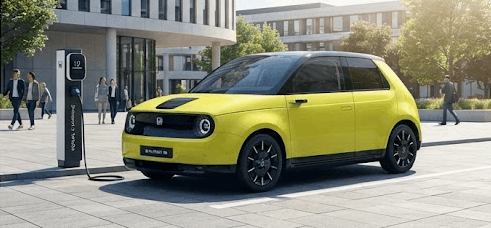
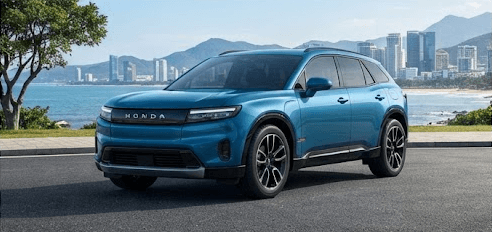
Yes. Honda’s answer to the electric vehicle market is the Prologue, the brand’s first mass-market, fully electric SUV sold in the United States. It launched for the 2024 model year and has stuck around since, quietly becoming one of the most sensible choices in the electric SUV segment. Before this honda electric car, the brand had dabbled in EVs remember the quirky Honda e or the low-volume Fit EV and Clarity Electric but none of those were built for the mainstream American buyer the way this model is.
Here is the part that surprises a lot of shoppers: the Prologue is not built entirely from scratch by Honda. It rides on General Motors’ Ultium EV platform, the same underlying architecture used in the Chevrolet Blazer EV. Honda handled the styling, tuning, and interior design, but the bones underneath came from a partnership with GM. That is not necessarily a bad thing it just means the vehicle drives a bit differently than what long-time owners might expect from a traditional Civic or CR-V. If you want to dive deeper into official efficiency data and alternative fuel infrastructure, you can check out the U.S. Department of Energy – Alternative Fuels Data Center.
Why Honda Partnered With GM Instead of Going It Alone
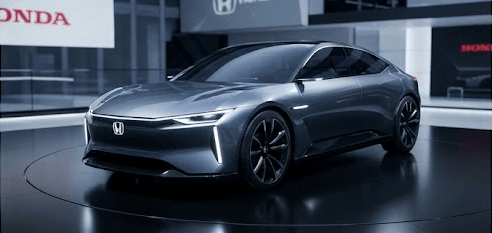
This is a question a lot of readers ask once they learn this new honda electric car shares bones with a Chevrolet. The short answer is timing. Honda’s own in-house EV platform, developed jointly with Sony under the Afeela brand and through Honda’s own “e:Architecture” plans, was not ready for the mid-2020s. Rather than wait years and hand the early electric SUV market entirely to Tesla, Ford, and Hyundai, Honda struck a deal with GM to borrow the Ultium platform and battery technology while it finished developing its next-generation electric vehicles in-house.
It is a pragmatic move, and honestly, a fairly common one in the auto industry. Toyota and Subaru share EV platforms. Ford and Volkswagen have swapped technology. Badge-engineering and platform-sharing are nothing new; the difference is that most buyers do not realize it is happening under the hood of their new vehicle.
Honda Prologue Price and Trims (2026)
For the 2026 model year, Honda dropped Prologue pricing significantly compared to previous years, making it one of the more financially approachable options in the segment. Depending on which configuration you look at, base pricing generally lands in the high-$40,000s, moving up toward the high-$50,000s for the loaded Elite trim.
The lineup breaks down into three core trims:
- EX: The entry point, available with either front-wheel drive or all-wheel drive.
- Touring: Adds extra tech, luxury, and comfort features for daily commuting.
- Elite: The top trim, all-wheel drive only, featuring the fullest suite of equipment.
Buyers can choose between a single front-mounted motor (220 horsepower, 243 lb-ft of torque) or a dual-motor all-wheel-drive setup that bumps output to around 300 horsepower and 355 lb-ft of torque. The AWD option typically adds a bit to the sticker price, but it is definitely worth considering if you frequently deal with slippery winter roads. For drivers who want to explore more spacious options before making a final choice, take a look at our complete guide on the best family cars.
It is also worth noting that Honda’s pricing strategy for 2026 was a deliberate response to slower-than-expected EV demand across the industry. Rather than leaning on discounts and lease deals the way some competitors have, Honda simply lowered the sticker price across the board, which tends to be a more attractive move for buyers who plan to finance or pay cash rather than lease.
Range and Battery: How Far Can the Prologue Go?
The Prologue uses an 85-kWh battery pack. Depending on the trim level and drivetrain choice, EPA-estimated range lands somewhere between roughly 280 and just over 300 miles. Front-wheel-drive models tend to squeeze out the maximum range, while the dual-motor all-wheel-drive versions trade a small fraction of efficiency for extra grip and punchy acceleration.
That puts the Prologue right in line with rivals like the Ford Mustang Mach-E and comfortably ahead of shorter-range competitors, though it does not quite match the longest-range variants of the Tesla Model Y. For owners interested in long-term vehicle ownership and keeping repair bills down, reviewing our insights on hybrid and vehicle maintenance after 100,000 miles offers great practical value.
In real-world terms, most daily commuters will not come close to draining a full battery in a single day. A typical American drives somewhere between 30 and 40 miles per day, meaning a fully charged model can comfortably cover four to five days of average driving before needing a top-up. Range anxiety, while a real concern for road-trippers, matters far less for buyers using this SUV primarily as a commuter vehicle or second car.
Charging the Prologue
Every 2026 Prologue now comes with a Portable Charging Kit as standard equipment, and Honda offers flexible charging incentive packages for new buyers:
- A home charging station bundled with an installation credit.
- A portable charging kit with a smaller installation credit plus a public charging credit.
- A standalone public charging credit option for buyers who prefer not to install a home unit.
Honda has also added support for the NACS-CCS adapter, opening up access to a wider public charging network a massive upgrade for road-trip usability and long-distance travel convenience. On a DC fast charger, the vehicle can typically add a meaningful chunk of range in around 30 to 35 minutes, which makes it reasonably road-trip friendly even if it is not quite as fast as some 800-volt competitors. At home, using a standard Level 2 charger overnight is enough to fully replenish the battery for most owners, so daily charging quickly becomes a background routine rather than a chore.
Technology and Safety Features
The Prologue does not skimp on modern tech. Standard equipment includes an 11-inch digital instrument cluster, an 11.3-inch touchscreen, wireless Apple CarPlay and Android Auto, a built-in Wi-Fi hotspot, and a convenient wireless charging pad.
Honda Sensing the brand’s signature suite of advanced driver-assist features comes standard across the entire lineup. This covers forward collision warning, automatic emergency braking, adaptive cruise control, lane-keeping assist, and blind-spot monitoring. Higher trims add helpful extras like a surround-view camera system and rear pedestrian alert.
Interior quality has also improved gradually since the model’s 2024 debut. Higher trims bring heated and ventilated front seats, a heated steering wheel, a Bose premium audio system, and a household-style power outlet for charging devices or running small appliances on the go. None of this feels flashy compared to some competitors’ minimalist, screen-dominated cabins, but it does feel familiar and functional—which is exactly what a lot of shoppers want.
Federal Tax Credits and Incentives
One factor that can meaningfully change the effective price of a Prologue is federal and state EV incentive eligibility, which shifts fairly often based on battery sourcing rules and legislation. Because eligibility criteria can change from year to year, it is worth checking directly with a Honda dealer or the U.S. Department of Energy’s Alternative Fuels Data Center for the most current incentive information before finalizing a purchase. Many states also offer their own additional rebates on top of any federal credit, so it is worth checking your local Department of Motor Vehicles or energy office as well.
Honda Prologue vs. the Competition
If you are cross-shopping in the current market, here is how this top-tier honda electric car stacks up against its biggest rivals:
- Vs. Tesla Model Y: The Model Y generally offers quicker acceleration and a more minimalist, tech-forward cabin, but the Prologue counters with a more traditional interior layout, physical buttons, and a lower starting price on comparable specs.
- Vs. Ford Mustang Mach-E: These two are extremely close competitors in both price range and daily battery life, so the final choice often comes down to personal styling preference and local dealership experience.
- Vs. Hyundai Ioniq 5: The Ioniq 5 tends to charge much faster thanks to its advanced 800-volt architecture, which matters a lot for frequent road-trippers, while the Prologue leans on Honda’s stellar reputation for everyday reliability and simplicity.
- Vs. Chevrolet Blazer EV: Given the shared Ultium platform, the two are mechanically similar under the skin, so the decision here often comes down almost entirely to styling, dealership network preference, and brand loyalty rather than any major functional difference.
Ownership Costs and Maintenance
One underrated advantage of going electric with the Prologue is the reduced maintenance burden compared to a gas-powered SUV. There is no oil to change, no exhaust system to maintain, and far fewer moving parts in the drivetrain overall. Brake wear also tends to be lighter thanks to regenerative braking, which uses the electric motor to slow the car and recapture energy rather than relying entirely on the brake pads.
That said, EV ownership brings its own considerations. Tire wear can be slightly higher due to the added weight from the battery pack, and insurance premiums for EVs are sometimes a bit higher than for comparable gas vehicles, partly due to more expensive repair costs if the battery pack itself is ever damaged. It is worth getting an insurance quote before finalizing your purchase decision so there are no surprises.
Pros and Cons
What works in the Prologue’s favor:
- Highly competitive, family-friendly pricing following recent market adjustments.
- Solid, dependable driving range for daily commutes and weekend getaways.
- Full suite of standard driver-assist safety technology included out of the box.
- Backed by Honda’s trusted dealer network and robust warranty support.
- Lower ongoing maintenance costs compared to a traditional gas-powered SUV.
Where it falls short:
- The cabin layout and platform feel a bit more GM than traditional Honda, which loyalists might notice immediately.
- Performance is comfortable and adequate rather than thrilling compared to high-end performance EVs.
- Charging speeds do not quite lead the class.
- Resale value data is still limited, since the model is relatively new to the used market.
Frequently Asked Questions
Q: Does Honda have an electric car?
A: Yes the Honda Prologue is Honda’s current all-electric SUV sold widely in the U.S. market.
Q: Does Honda make an electric car themselves, or is it built with a partner?
A: The Prologue is built on General Motors’ Ultium EV platform through a strategic partnership. Honda designed the exterior styling, interior environment, and suspension tuning, while GM provided the underlying electric architecture.
Q: What is the Honda Prologue’s range?
A: Depending on the trim and drivetrain configuration, the EPA-estimated range spans from roughly 280 miles up to over 300 miles on a full charge.
Q: How much does the Honda Prologue cost?
A: Pricing starts in the high-$40,000s for the base EX trim and scales up toward the high-$50,000s for a fully loaded Elite trim, before accounting for any local incentives or tax credits.
Q: Is the Honda Prologue a good first EV?
A: For many buyers, yes. Its familiar cabin layout, strong safety suite, and Honda dealer support make the transition from gas to electric feel less intimidating than some more tech-heavy competitors.
Q: Will Honda build its own EV platform in the future?
A: Honda has publicly discussed plans for its own next-generation electric architecture, developed independently of GM, for future EV models beyond the Prologue’s current generation.
Final Thoughts
The Honda Prologue will not win any track day drag races, and it will not blow away tech enthusiasts looking for radical futuristic gimmicks. But that is kind of the point. It is a comfortable, safe, and reasonably priced electric SUV for everyday people who want to transition to electric driving without having to relearn how to be a car owner. If you are a Honda loyalist eyeing your first EV, or simply someone looking for a dependable, no-drama electric ride, it definitely deserves a spot on your test-drive shortlist.
Disclaimer: Pricing, range capabilities, and specifications are based on the latest available model-year data from official manufacturer announcements and automotive sources. Always confirm current dealer incentives before making a purchase.