Buying a pre-owned vehicle is one of the smartest financial moves you can make, provided you know what to avoid when buying a used car. By opting for a quality used vehicle instead of a brand-new model, you completely bypass the brutal first-year depreciation hit which often claims up to 20% to 30% of a new car’s value within the first twelve months alone.
However, entering the used car market without a clear evaluation strategy can quickly turn those upfront savings into a financial headache. Knowing what to avoid when buying a used car is the ultimate line of defense between landing a bulletproof, low-maintenance daily driver and inheriting someone else’s expensive mechanical failure.
Whether you are negotiating on a dealership floor or inspecting a vehicle in a private seller’s driveway, staying alert to these 12 critical red flags, mechanical warning signs, and financial traps will ensure you make a safe, confident, and budget-friendly purchase.
Whether you are searching for the best used cars under $10,000 on a tight budget, looking for a reliable commuter car, or choosing one of the best family cars of 2026, knowing what to avoid when buying a used car ensures you get the maximum value without unexpected repairs.
1. Shopping Based Solely on Monthly Payments
One of the most effective sales tactics used by dealership finance departments is shifting your focus away from the vehicle’s total purchase price and anchoring your attention strictly on the monthly payment amount. Avoiding long-term loan traps is a major part of understanding what to avoid when buying a used car.
When you negotiate based solely on what you can afford to pay each month, sales representatives can easily manipulate the numbers by stretching loan terms out to 72, 84, or even 96 months. While this artificially lowers your immediate monthly outlay, compound interest significantly inflates the actual total cost of the vehicle over time. Furthermore, long-term auto loans frequently cause buyers to fall into “negative equity” for years.
Pro Tip: If you are trying to stick to a tight budget without taking on long-term debt, read our guide on cheap reliable cars that offer maximum long-term value. Learning what to avoid when buying a used car includes negotiating the total out-the-door (OTD) price of the car first.
2. Skipping a Professional Pre-Purchase Inspection (PPI)
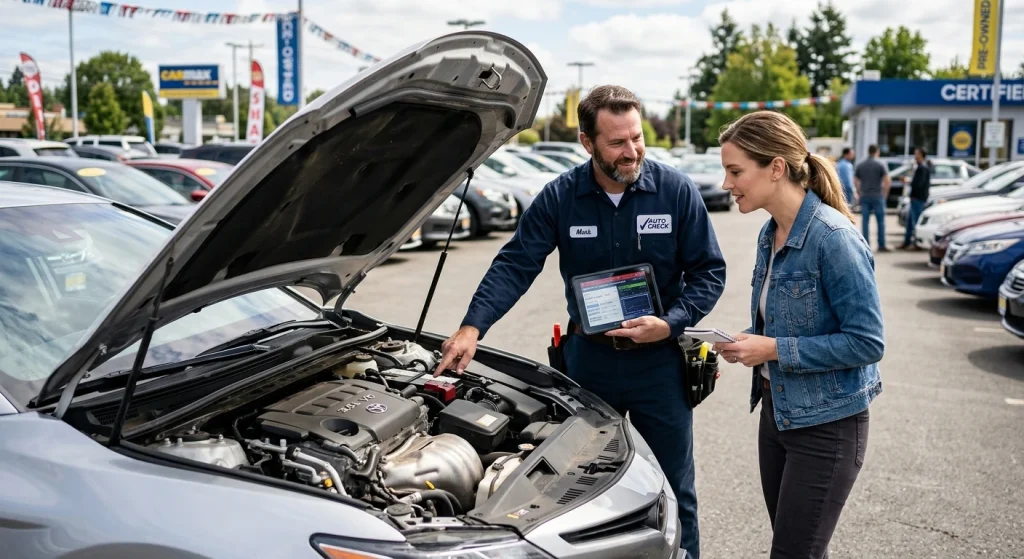
Never rely solely on a seller’s verbal assurances or a basic dealer inspection sheet that claims the car underwent a “150-Point Check.” Even a car with flawless bodywork and a detailed interior can hide failing head gaskets, transmission slipping, or badly worn suspension bushings underneath. If you want to know what to avoid when buying a used car, skipping an independent inspection tops the list.
Always schedule a formal Pre-Purchase Inspection (PPI) with an independent, certified mechanic who has no financial tie to the seller or dealership.
What a Proper PPI Covers:
- Full diagnostic scanner check for cleared warning codes.
- Undercarriage inspection for frame cracks, rust, and hidden oil or coolant leaks.
- Steering alignment, suspension wear, and brake rotor condition.
- Cooling system pressure testing to check for head gasket integrity.
Spending $100 to $150 on an independent inspection is a key step in learning what to avoid when buying a used car, potentially saving you thousands of dollars in sudden, post-purchase repair bills.
3. Ignoring the Vehicle History Report (VIN Check)
Failing to run a comprehensive vehicle history report through established automotive databases is a massive risk. Checking title status and accident history is critical when deciding what to avoid when buying a used car. A glossy paint job and polished wheels can easily disguise a vehicle with a history of severe accidents or severe weather damage.
When reviewing a vehicle history report from platforms like Carfax or AutoCheck, examine these specific data points:
- Title Status: Steer completely clear of salvage, rebuilt, flood, or lemon-law buyback titles. These vehicles are difficult to insure, hard to finance, and often suffer from permanent structural or electrical integrity issues.
- Odometer Mileage Progression: Verify that the mileage logs listed during emissions tests and service visits progress logically over time. Discrepancies may indicate illegal odometer rollback attempts.
- Accident Records & Airbag Deployments: Look beyond basic fender-benders. Pay close attention to structural frame damage or airbag deployment incidents.
- Service Records: Look for evidence of consistent oil changes, brake service, and fluid flushes. A vehicle with missing service logs highlights what to avoid when buying a used car if you want a reliable ride.
4. Skipping the Cold Test Drive
An estimated 20% of used car buyers fail to take a proper test drive before signing purchase paperwork. Even worse, many buyers test drive a vehicle that the seller has already run and warmed up prior to their arrival. When evaluating what to avoid when buying a used car, a pre-warmed engine is a major warning sign that can easily hide severe mechanical problems.
When arranging your appointment, explicitly request that the engine remain completely cold until you arrive. A true cold engine start reveals critical mechanical indicators that disappear once the vehicle reaches normal operating temperatures:
- Exhaust Smoke Signals: Blue smoke indicates burning engine oil (failing valve seals or piston rings). Thick white smoke with a sweet smell indicates burning coolant (blown head gasket). Heavy black smoke indicates an overly rich fuel mixture.
- Cold Start Noises: Listen closely for metallic engine knocks, timing chain rattles, or noisy hydraulic lifters during the first 30 seconds of running.
- Transmission Engagement: Cold transmission fluid highlights delayed gear shifts, harsh slipping, or transmission hesitation.
During the drive itself, turn off the audio system completely. Drive over varied terrain including open highway speeds and stop-and-go city streets to test brake responsiveness, wheel alignment, and suspension noise. Mastering cold-start tests is an essential skill when learning what to avoid when buying a used car.
5. Overlooking Frame and Undercarriage Rust
While minor surface rust on body panels or exhaust hangers is mostly cosmetic, structural rust on the frame, floor pans, subframe, or suspension mounting points is dangerous. Severe structural corrosion should top your list of what to avoid when buying a used car because it compromises safety during an impact and can render a car impossible to align or pass state safety inspections.
Bring a strong flashlight and crawl underneath the vehicle to examine the frame rails, rocker panels, and suspension attachment points. If you live in harsh winter climates, explore our recommendations for the best truck for snow and winter driving to see which undercarriages hold up best against salt corrosion.
6. Negotiating Face-to-Face Under High Pressure
Walking directly onto a dealership lot without doing prior market research puts you at a distinct disadvantage. Sales personnel are highly trained in high-pressure persuasion tactics designed to push you into an emotional impulse purchase once you are physically standing on their showroom floor.
When reviewing what to avoid when buying a used car at a dealership, falling for pushy floor tactics is a common trap. Whenever possible, conduct your initial inquiries, price comparisons, and preliminary negotiations via phone or email. Securing written quotes from multiple sellers before visiting in person allows you to compare offers calmly in your own home without feeling rushed into a decision.
7. Falling for Hidden Dealer Fees and Add-Ons
When purchasing through a dealership, the price displayed on the vehicle’s window sticker or online listing is rarely the final number on the bill of sale. Knowing what to avoid when buying a used car means keeping an eye out for unnecessary, inflated junk fees, including:
- Excessive documentation (“doc”) fees exceeding regional averages.
- Mandatory “reconditioning” or vehicle preparation charges.
- Overpriced dealer add-ons such as fabric protection spray, paint sealants, nitrogen-filled tires, or window etching.
Always demand a fully itemized breakdown of all charges. Firmly request the removal of any non-government dealer add-ons that you did not explicitly request in writing this is essential when learning what to avoid when buying a used car.
8. Ignoring Specific Problematic Engine and Transmission Model Years
Not all model years within a generally reliable vehicle lineup perform equally well. Even world-renowned automakers with solid reputations for reliability occasionally produce specific engine variants or transmission designs plagued by high factory defect rates.
Before committing to a specific vehicle, review official safety and crash-test ratings on IIHS.org, and check our comprehensive best family cars 2026 guide to identify top-rated models. Understanding what to avoid when buying a used car involves skipping well-documented failure trends, such as:
- Nissan Models (2007–2018): Early generations of continuously variable transmissions (CVTs) prone to sudden overheating, slipping, and total failure.
- Ford Focus & Fiesta (2011–2018): Dual-clutch “PowerShift” automatic transmissions plagued by violent shuddering, hesitation, and frequent clutch pack failures.
- Hyundai & Kia Models (2011–2019): Theta II 2.4L gasoline direct injection (GDI) engines susceptible to internal metal debris causing sudden engine seizure.
- Toyota Models (2006–2011 2.4L 2AZ-FE Engine): Known for excessive engine oil consumption due to defective piston ring designs.
9. Neglecting Fluid Quality and Condition Checks
Checking the quality, color, and level of internal fluids offers direct insight into how responsibly the previous owner maintained the vehicle over its lifetime. Sludgy or neglected engine oil is another prime example of what to avoid when buying a used car.
Open the hood and perform these quick fluid checks:
- Engine Oil: Pull the dipstick and inspect the oil filler cap. Dark, thick, sludgy oil or gritty buildup beneath the cap signals neglected oil change schedules. A milky, frothy texture similar to milk tea indicates coolant mixing with oil due to a blown head gasket.
- Transmission Fluid: Pull the transmission dipstick (if equipped). Healthy fluid should appear translucent pinkish-red or light brown. Dark black fluid accompanied by a sharp, burnt metallic smell indicates heavy internal clutch plate wear and severe overheating.
- Engine Coolant: Inspect the coolant reservoir. Healthy coolant appears bright green, orange, or pink. Brown, rusty water or floating oil droplets signal cooling system corrosion or engine block failures.
10. Failing to Thoroughly Test Electrical and Cabin Systems
Modern automobiles are essentially computers on wheels, featuring dozens of interconnected electronic control modules. Replacing failed alternators, power window regulators, air conditioning compressors, or infotainment screens can quickly add hundreds or even thousands of dollars to your initial purchase cost. Failing interior electronics top the list of what to avoid when buying a used car if you want to prevent sudden repair costs.
Take 10 minutes to methodically test every interior feature before closing the deal:
- Test every power window switch, power mirror adjustment, and central door lock button.
- Verify the infotainment screen’s responsiveness, Bluetooth connectivity, sound output, and backup camera clarity.
- Test the heating, ventilation, and air conditioning (HVAC) system through all fan speeds and temperature modes (confirm the AC blows ice-cold and the heater blows hot).
- Verify instrument cluster lights: Ensure the Check Engine Light, ABS light, and Airbag warning light illuminate briefly when the key is turned to the ignition position, and that all warning lights turn off completely once the engine is running.
11. Overlooking Tire Wear and Alignment Signals
Tires are often overlooked during vehicle evaluations, yet replacing a full set of quality tires can immediately cost anywhere from $600 to $1,200+. Knowing what to avoid when buying a used car includes analyzing tire wear patterns to detect underlying mechanical issues.
Inspect all four tires for these key signs:
- Uneven Inner or Outer Edge Wear: Indicates severe wheel misalignment, bent suspension control arms, or worn tie rod ends.
- Cupping or Scalloped Tread Patterns: Points to completely worn-out shock absorbers or struts.
- Mismatched Brands and Tread Depths: Signals that a previous owner cut corners on routine maintenance, replacing tires individually with cheap or used rubber. Knowing what to avoid when buying a used car helps you spot these red flags easily.
12. Buying Without Verifying Maintenance Records
A used vehicle with low mileage is not automatically a great deal if it has sat idle for years without basic routine maintenance. Unverified service records are critical to keep in mind when evaluating what to avoid when buying a used car, as time-degraded fluids, dried-out rubber seals, cracked serpentine belts, and dry-rotted tires can turn a low-mileage car into a maintenance headache.
Always ask the seller for physical or digital service receipts proving that key maintenance milestones were performed on schedule:
- Timing belt and water pump replacements (typically due every 80,000 to 100,000 miles on applicable engines).
- Spark plug and ignition coil service intervals.
- Brake pad and fluid replacements.
- Transmission and differential fluid service.
Essential Used Car Buyer’s Inspection Checklist
Keep this summary checklist handy when evaluating pre-owned vehicles in person:
| Inspection Category | Key Action Items | What You Are Protecting Against |
|---|---|---|
| 1. History & Paperwork | Run a VIN report; confirm matching title names. | Salvage titles, odometer fraud, and hidden crash records. |
| 2. Mechanical Inspection | Book an independent Pre-Purchase Inspection (PPI). | Undetected engine issues, transmission slippage, and suspension failure. |
| 3. Cold Start & Drive | Start engine cold; test drive on city & highway roads. | Cold-start engine knocks, burning oil smoke, and gear hesitation. |
| 4. Undercarriage Check | Inspect frame rails and subframes with a flashlight. | Dangerous structural rust and frame rot. |
| 5. Financial Terms | Lock in total Out-the-Door (OTD) purchase price in writing. | Hidden dealer add-ons, junk doc fees, and interest rate traps. |
Final Words: Patience Wins the Best Deals
The key to successfully navigating the pre-owned market comes down to emotional discipline. Never allow excitement or high-pressure sales pitch tactics to rush you into ignoring obvious warning signs.
By learning what to avoid when buying a used car and strictly following a methodical inspection process, you can confidently filter out poor-quality vehicles, negotiate from a position of total strength, and drive home in a reliable, high-value vehicle that serves you dependably for years to come. Remind yourself of what to avoid when buying a used car every time you inspect a potential purchase. Always double-check your checklist of what to avoid when buying a used car before signing the final paperwork.