Finding the best truck for snow and winter driving means looking past the “4WD” badge on the tailgate. Most trucks handle a light dusting of snow just fine — the real test comes the first time you hit real winter: an unplowed mountain road, a driveway buried under a foot of lake-effect snow, or black ice on a bridge deck at 6 a.m. That’s when the difference between a truck that just has 4WD and a truck actually built for winter becomes obvious.
We’ve spent time digging into what separates the two: ground clearance, transfer case type, differential locking, tire compounds, even how the cabin holds up when it’s -10°F outside. Below is what we found, truck by truck, along with the mechanical reasoning behind each pick — not just a list of names.
If you’re also shopping for a second vehicle or a tighter-budget option to pair with a winter truck, our guides on Best Cars Under 10,000, Best Used Cars Under 20,000, and Safest Cars for New Drivers cover that ground too.
How to Choose a Truck for Snow: The Core Mechanical Factors
Selecting the best pickup for winter demands an understanding of physics. Pickups carry a unique structural characteristic that directly affects winter handling: an inherent front-heavy weight distribution. With a heavy engine mounted over the front axle and an empty, lightweight cargo bed over the rear axle, an unladen truck can easily lose rear traction on slick surfaces.
To counter this natural instability, the best snow truck configurations rely on a harmony of mechanical and electronic components designed to maximize power delivery to the tires that actually have grip.
When evaluating a winter driving truck, prioritize these core mechanical factors:
- Drivetrain Versatility: Look for transfer cases offering an “Auto 4WD” mode alongside traditional 4H and 4L settings.
- Differential Locking & Slip Control: Limited-slip rear differentials (LSD) or automatic locking differentials (like GM’s Eaton G80) prevent single-wheel spinouts on icy inclines.
- Weight Distribution & Wheelbase: Longer wheelbases offer greater directional stability on icy highways, while balanced axle loads improve steering response.
- Thermal Management & Electrical Capacity: High-output alternators and heavy-duty cold-cranking batteries ensure accessories run smoothly without draining the electrical system during sub-zero cold starts.
Data compiled by the NHTSA shows that all-wheel traction drastically improves acceleration on slippery surfaces, though stopping capability remains almost entirely dependent on tire grip and braking systems.
Essential Winter Features Every Pickup Must Have
When temperatures plunge below zero, basic comforts transform into crucial safety systems. Modern winter pickups offer dedicated cold-weather packages that protect mechanical components and keep drivers alert.
1. Automatic Four-Wheel Drive (Auto 4WD / 4A)
Unlike standard Part-Time 4WD—which binds the front and rear drivelines together and cannot be used on dry or patchily icy pavement without driveline damage—an Automatic 4WD system uses an electromechanical clutch inside the transfer case. It sends 100% of torque to the rear wheels under normal conditions, but instantly engages the front wheels the moment sensors detect rear wheel slip. This makes it the ideal setting for variable road conditions where black ice alternates with dry asphalt.
2. Heated Windshield Wiper Park and Side Mirrors
Few things degrade winter driving safety faster than wiper blades freezing into chunks of ice, leaving massive streaks across your field of vision. Premium winter packages include heating elements embedded beneath the lower wiper resting area on the windshield, along with heated side-view mirrors that melt frost and salt residue automatically.
3. Remote Start and Engine Block Heaters
Starting an engine at -15°F causes severe oil starvation during the first few critical seconds of cranking. An engine block heater warms the coolant and engine block oil, dramatically reducing starter wear, accelerating engine oil pressure build-up, and allowing the cab heater to blow warm air almost immediately upon key turn. Coupled with factory remote start, your cab, seats, and windshield defrost before you even step outside.
4. Advanced Drive Modes (Snow/Ice/Slippery)
Modern throttle-by-wire and electronic stability control systems recalibrate powertrain response when set to “Snow” or “Slippery” mode. The transmission adjusts to launch the vehicle in second gear, softening initial torque output to prevent wheel spin, while the anti-lock braking system (ABS) recalibrates to allow controlled, micro-slips that cut through loose snow pack.
If you’re looking for versatile pre-owned options that carry many of these features without new-truck price tags, consult our list of Best Used Cars and Best Used Cars for Teens for budget-friendly winter guidance.
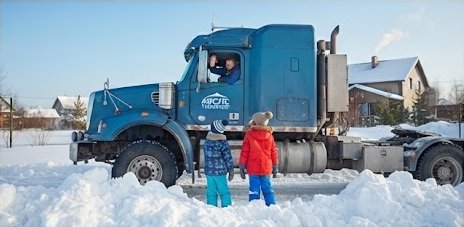
4WD vs AWD: Understanding Winter Drivetrains
One of the most frequent points of confusion for buyers seeking a truck for snow is the mechanical difference between Four-Wheel Drive (4WD) and All-Wheel Drive (AWD). While both systems supply power to all four wheels, their engineering and real-world behavior on icy roads differ significantly.
Traditional Part-Time 4WD (4H / 4L)
Traditional 4WD locks the front and rear driveshafts together at a fixed 50/50 torque split. When engaged in 4H (4WD High), both axles turn at identical speeds. This delivers unstoppable linear traction in deep snow, mud, and sand.
However, because the inner and outer wheels must rotate at different speeds when negotiating a turn, locking the front and rear axles on dry or patchy pavement causes driveline “binding” or “crow-hopping.” This can damage transfer case gears and axle joints. Therefore, standard 4H must be manually disengaged as soon as you transition from deep snow back onto dry pavement.
4L (4WD Low) incorporates a secondary gear reduction ratio (often 2.5:1 to 4:1) that multiplies engine torque while slowing vehicle movement to a crawl. This setting is strictly for pulling out of deep snowdrifts, climbing steep, icy off-road inclines, or unsticking heavy trailers.
Full-Time All-Wheel Drive (AWD)
Found in unibody pickup platforms like the Honda Ridgeline, Ford Maverick AWD, and Hyundai Santa Cruz, AWD utilizes a center differential or an electronically controlled multi-plate clutch pack to continuously distribute power to all four wheels.
AWD systems are permanently active and automatically route torque away from slipping wheels to those with grip, seamlessly accommodating dry pavement, slush, and black ice without driver intervention. While unibody AWD trucks generally lack low-range transfer cases for deep off-road rock crawling, their instant adaptabilities make them exceptional for daily highway winter driving.
Automatic 4WD (The Best of Both Worlds)
Top-tier full-size pickups—such as the Ford F-150, Ram 1500, GMC Sierra, and Chevy Silverado equipped with two-speed transfer cases—offer a setting labeled 4 Auto or 4A. This setting operates as an AWD system on dry/wet pavement using internal clutch plates, while retaining true mechanical 4H and 4L modes for deep snow, mud, and heavy hauling. For buyers who want maximum adaptability, an AWD truck capability paired with a 2-speed transfer case represents the pinnacle of winter engineering.
Ground Clearance and Underbody Protection
When navigating unplowed roads or deep snowdrifts, ground clearance is your first line of defense. If a truck’s frame or underbody skid plates rest on top of dense snow pack, the vehicle “high-centers”—lifting the tires off the ground and destroying all traction, regardless of how advanced your 4WD system is.
- Minimum Threshold: For light snow commuting, 8.0 inches of clearance is sufficient.
- Deep Snow Threshold: For heavy winter storms, rural unplowed routes, and mountain passes, a minimum clearance of 9.5 to 11.5 inches is recommended.
Underbody protection is equally vital. Packed wet snow and hidden ice chunks can shear off vulnerable transmission pan wiring, damage brake lines, or crack fuel tank housings. Look for factory options that include heavy-duty steel or reinforced aluminum skid plates protecting the oil pan, transfer case, and fuel tank.
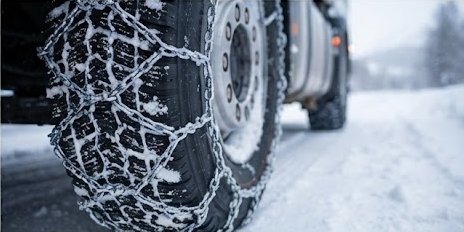
Winter Tires: The Foundation of Cold-Weather Traction
No matter how advanced your pickup’s four-wheel-drive system or locking differentials are, your truck’s dynamic safety limits are dictated by four rubber contact patches, each barely larger than the palm of your hand. Relying on standard factory All-Season tires during severe freezing conditions is one of the most dangerous mistakes a truck owner can make.
The Physics of Rubber Compounds
Standard all-season tires utilize rubber compounds formulated to withstand high summer heat. When temperatures drop below 45°F (7°C), the tread compound undergoes a phase change, hardening like a plastic hockey puck. This “glass transition” eliminates tactile micro-flexibility, drastically reducing traction on dry cold pavement, wet ice, and hard-packed snow.
Dedicated winter truck tires—and specialized 3-Peak Mountain Snowflake (3PMSF) rated all-terrain tires utilize high-silica rubber compounds that retain pliability at sub-zero temperatures. This allows the tread block edges to deform over small pavement imperfections and bite directly into icy surfaces.
Siping and Tread Geometry
If you look closely at a winter tire like the Bridgestone Blizzak LT, Nokian Hakkapeliitta LT3, or Michelin X-Ice Snow SUV, you will notice thousands of microscopic, zig-zag slices cut across the tread blocks. These are called siping.
As the tire rotates across ice, pressure creates a microscopic film of water. The sipes flex open, creating a vacuum effect that pulls moisture away from the contact surface while presenting thousands of sharp, biting edges to grip the ice. Standard all-season and mud-terrain tires lack high-density siping, causing them to hydroplane on thin icy surface water.
Tire Category Recommendations
- Dedicated Winter Tires (Best for Ice & Hard-Pack): Nokian Hakkapeliitta LT3, Bridgestone Blizzak LT. Unmatched stopping distance on glare ice and packed snow.
- 3PMSF All-Terrain Tires (Best Year-Round Versatility): BFGoodrich All-Terrain T/A KO3, Goodyear Wrangler DuraTrac RT, Falken Wildpeak A/T4W. Excellent deep powder biting traction with solid multi-season tread life.
Testing data published by Consumer Reports which brakes dozens of tire models on an actual ice rink every year consistently shows that a rear-wheel-drive truck fitted with dedicated winter tires will out-brake and out-steer a 4×4 truck on standard all-seasons.
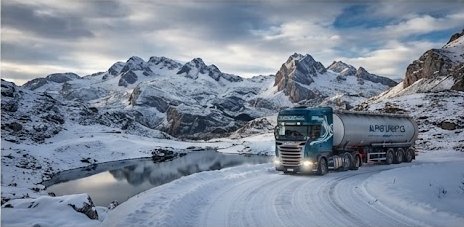
Best Truck for Snow and Winter Driving: Comprehensive Model Reviews
To determine the absolute best truck in snow, we evaluated real-world ground clearance, transfer case technology, thermal performance, cabin ergonomics, and safety ratings. Below are the top-performing winter pickups across every major segment.
1. Ford F-150: The Best Overall Full-Size Winter Pickup
The Ford F-150 holds its position as the premier full-size winter driving truck thanks to its structural balance, extensive winter equipment options, and advanced powertrain technology. With up to 11.9 inches of ground clearance on specialized off-road packages and a light high-strength aluminum-alloy body that lowers the vehicle’s center of gravity, the F-150 negotiates deep snow drifts with remarkable agility.
Cold-Weather Performance & Engineering
Higher trims (Lariat, King Ranch, Platinum, Tremor, and Raptor) come standard with an automatic two-speed transfer case featuring 4A (Auto 4WD). This system monitors wheel speed, steering angle, and throttle position hundreds of times per second, routing torque seamlessly to the front axle the millisecond rear slip is detected.
Under the hood, the 3.5L EcoBoost Twin-Turbo V6 produces 400 horsepower and 500 lb-ft of torque, delivering massive low-end pulling power without needing high engine RPMs that can break wheel traction on ice. For extreme cold climates, the available 3.5L PowberBoost Hybrid incorporates a 1.5 kWh lithium-ion battery and the revolutionary Pro Power Onboard system, providing up to 7.2 kW of exportable electricity. This generator can run heavy heater units, recovery equipment, or house power during winter blackout emergencies.
Interior Ergonomics & Cold-Weather Amenities
Ford’s interior designers clearly understand sub-zero winters. Buttons for heated seats, heated steering wheel, climate control, and drive modes feature physical, tactile knobs that can be easily operated while wearing thick winter gloves. The heated windshield wiper park region prevents ice buildup during heavy snowfall, while optional Max Recline front seats provide rest options during long snowstorm recovery waits.
Real-World Testing Notes
On snow-packed mountain passes, the F-150’s Selectable Drive Modes (“Deep Snow/Sand” and “Slippery”) recalibrate the 10-speed automatic transmission to upshift early and smooth out throttle tip-in. When combined with an electronic locking rear differential, the F-150 pulls out of deep snowbanks with minimal fuss.
2. Ram 1500: The Smooth-Riding Highway Winter Cruiser
If your winter driving consists of long interstate commutes through freezing rain, slush, and high-speed crosswinds, the Ram 1500 delivers unmatched ride comfort and high-speed directional stability. By replacing traditional leaf springs with a multi-link rear coil-spring setup (or optional four-corner active air suspension), the Ram 1500 remains planted on icy bumps that cause leaf-sprung competitors to jitter and slide sideways.
Cold-Weather Performance & Engineering
The Ram 1500 utilizes an available BorgWarner active transfer case with 4WD Auto, 4WD High, and 4WD Low. In 4WD Auto, the truck behaves like a sophisticated AWD vehicle, making it an exceptional pickup for mountain roads subject to rapidly changing surface conditions.
The twin-turbo 3.0-liter Hurricane Inline-6 engine generates smooth, linear power (420 hp in Standard Output; 540 hp in High Output), eliminating the peaky power spikes that can break wheel grip on icy surfaces. Furthermore, the optional Active-Level Four-Corner Air Suspension allows the driver to lift the truck up to 2 inches at the touch of a button, boosting ground clearance to clear deep snow drifts or unplowed driveways, and then lowering automatically at highway speeds to maximize aerodynamic stability and fuel efficiency.
Interior Comfort & Technology
Ram sets the industry benchmark for truck cabin comfort. The available heated front and rear seats heat up rapidly, while the heavy-duty HVAC system can warm up a frozen cabin in sub-zero temps. The massive Uconnect touchscreen remains responsive even in extreme cold, and includes dedicated physical buttons alongside screen icons for critical climate controls.
3. GMC Sierra 1500 AT4 / Chevrolet Silverado 1500 ZR2: Deep-Snow Off-Road Titans
For drivers facing extreme winter terrain, unplowed rural access roads, or heavy-duty snow towing, General Motors’ off-road flagship duo—the GMC Sierra 1500 AT4 / AT4X and Chevrolet Silverado 1500 ZR2—represent the ultimate in factory-built best off road truck for snow capability.
Cold-Weather Performance & Engineering
Both trucks come equipped with GM’s legendary Autotrac 2-Speed Transfer Case, featuring a true “Auto” mode for variable road conditions alongside 4H and 4L. Where these trucks truly excel is in differential management. While standard Sierra and Silverado models utilize the Eaton G80 automatic locking rear differential, the AT4X and ZR2 feature driver-selectable front and rear electronic locking differentials.
When locked, 100% of available torque is split equally to all four wheels, ensuring that even if three wheels are spinning on pure blue ice, a single wheel with traction will pull the truck forward out of a snowbank.
Under the hood, the available 3.0L Duramax Turbo-Diesel Inline-6 delivers 305 horsepower and a massive 495 lb-ft of torque at a low 1,500 RPM. Diesel engine block heaters come optional, and modern quick-start glow plugs ensure dependable starting down to sub-zero temperatures. The engine’s low-RPM torque delivery provides precise low-speed control when pulling heavy loads through deep, sticky snow.
Factory Winter Enhancements
Equipped with factory suspension lifts (yielding up to 11.5 inches of ground clearance) and standard Goodyear Wrangler DuraTrac or Territory MT tires, these trucks float over deep snowpack that would bottom out standard half-ton pickups.
4. Toyota Tacoma: Midsize Agility for Icy Mountain Trails
For drivers who find full-size trucks cumbersome on narrow, ice-slicked city streets or tight mountain switchbacks, the Toyota Tacoma offers a nimble, exceptionally reliable alternative. Completely redesigned on Toyota’s global TNGA-F truck platform, the Tacoma combines rugged durability with modern traction control systems, making it a standout winter pickup truck.
Cold-Weather Performance & Engineering
The Tacoma offers two distinct 4WD systems depending on trim level:
- TRD Off-Road & Sport: Utilize a traditional Part-Time 2-speed 4WD system with an electronically controlled transfer case and rear locking differential.
- Limited Trim: Introduces a Full-Time AWD system with a center locking differential, perfect for drivers who encounter mixed pavement conditions, icy highway miles, and unpredictable weather.
Power comes from a standard 2.4-liter turbocharged i-FORCE engine or the high-output i-FORCE MAX Hybrid, which paired with electric motor torque delivers 326 hp and 465 lb-ft of torque. The Multi-Terrain Select (MTS) system includes a refined Auto/Snow mode that precisely modulates wheelspin by regulating throttle input and wheel braking, allowing controlled progress over slippery surfaces without bogging down the engine.
Resale Value & Long-Term Reliability
In addition to its cold-weather prowess, the Tacoma consistently earns high reliability and resale value scores from industry benchmarks like Kelley Blue Book and J.D. Power. If you’re exploring budget-friendly pre-owned alternatives in the midsize market, check out our guide on Best Cars Under 30000 and Best Cars Under 40000.
5. Jeep Gladiator: Convertible Freedom with Heavy-Duty Snow Capability
With 11.6 inches of ground clearance out of the factory, solid Dana 44 front and rear axles, and short front/rear overhangs, the Jeep Gladiator stands out as an exceptionally capable midsize snow driving truck.
Cold-Weather Performance & Engineering
While lower trims use the Command-Trac part-time 4WD system, select Gladiator trims offer the advanced Selec-Trac Full-Time 4WD System. Selec-Trac features a continuous “4H Auto” mode that operates like an AWD system on paved roads, automatically routing power to the front axle when rear traction decreases.
The Gladiator’s heavy-duty solid axle configuration provides outstanding wheel articulation, keeping tires planted over snowbanks, deep slush ruts, and plowed snow mounds. When equipped with the Cold Weather Group, you get heated seats, a heated steering wheel, and remote engine start.
6. Honda Ridgeline: The Ultimate Daily Commuter on Icy Roads
While purists may dismiss unibody pickups, the Honda Ridgeline offers real-world winter road performance that rivals or exceeds many traditional body-on-frame trucks on paved surfaces. For drivers who face patchily icy highways, slushy suburbs, and moderate snowfall rather than three-foot off-road snowdrifts, the Ridgeline is one of the safest, most stable winter vehicles available.
Cold-Weather Performance & Engineering
The core of the Ridgeline’s winter capability lies in its i-VTM4 (Intelligent Variable Torque Management) AWD System. Unlike traditional 4WD systems that split torque front-to-rear, i-VTM4 can send up to 70% of engine torque to the rear axle, and then distribute 100% of that rear torque to either the left or right rear wheel via individual electro-hydraulic clutch packs.
If your right rear wheel hits black ice while the left rear wheel sits on dry asphalt, the Ridgeline automatically sends all rear drive force to the left wheel, instantly stabilizing the vehicle without harsh brake interventions. Coupled with a dedicated Intelligent Traction Management system featuring a tailored Snow Mode, the Ridgeline simplifies winter driving.
For buyers who prioritize overall commuter fuel efficiency along with cold-weather capability, compare the Ridgeline with top options in our Best Fuel Efficient Cars round-up.
7. Ford Super Duty (F-250/F-350) & Ram 2500: Heavy-Duty Snow Plow and Hauling Beasts
When winter demands involve clearing commercial parking lots with a ten-foot snow plow blade, or hauling a 15,000-pound enclosed trailer through a blizzard, half-ton trucks reach their weight and frame limits. Heavy-duty pickups like the Ford Super Duty F-250/F-350 and Ram 2500/3500 serve as the undisputed best heavy duty truck for winter work.
Cold-Weather Performance & Engineering
Heavy-duty trucks feature thick boxed steel frames, heavy-duty solid axles, massive brake rotors, and immense curb weight (often exceeding 7,500 lbs). This high overall curb weight exerts significant downforce on the tires, helping them slice through packed slush down to pavement.
The optional 6.7L Power Stroke Turbo Diesel V8 in the Ford Super Duty generates up to 500 hp and 1,200 lb-ft of torque, while Ram’s 6.7L Cummins Inline-6 Turbo Diesel offers unmatched durability. Ford offers a factory Snow Plow Prep Package, which adds upgraded front springs, a high-output alternator (up to 410 amps dual alternators), and heavy-duty steering gear designed to support heavy commercial snow plows.
Heavy-Duty Winter Considerations
While heavy-duty trucks excel at plowing and towing, their sheer mass requires careful driving on glare ice. Stopping a 7,500+ lb vehicle on an icy decline requires significantly greater stopping distance than a light midsize truck.
Pros & Cons of Using a Pickup Truck for Winter Driving
While trucks offer clear advantages in winter conditions, buyers should weigh both the benefits and potential trade-offs of choosing a pickup over an AWD crossover or SUV.
Advantages
- Commanding View of the Road: Elevated seating height provides excellent visibility through blowing snow and over snowbanks.
- Deep Snow Capability: High ground clearance (8.5 to 11.9+ inches) keeps the chassis elevated above deep drifts.
- Mechanical Robustness: Heavy-duty frame construction, solid axles, and low-range transfer cases handle impacts with hidden curb hazards or ice blocks better than light unibody passenger cars.
Drawbacks
- Unladen Rear Traction: An empty bed creates an uneven front/rear weight split, requiring added ballast over the rear axle in 2WD mode.
- Overall Mass and Braking Distance: Higher overall curb weight means momentum can carry a sliding truck farther on glare ice if tires lose grip.
- Cold Weather Fuel Economy: Cold engine oil, winter blend fuels, and four-wheel-drive engagement can decrease fuel economy by 15% to 25% during winter months.
Comprehensive Comparison Table: Best Winter Trucks
Below is a detailed engineering and winter capability comparison of the top pickups evaluated by our automotive editorial team.
| Vehicle Model | Segment | Max Ground Clearance | Drivetrain Type | Auto 4WD Available? | Heated Wheel/Seats? | Ideal Winter Application |
| Ford F-150 | Full-Size 1500 | 11.9 in. | Part-Time / 2-Speed Auto 4WD | Yes (4A) | Yes (Standard on mid/high trims) | Best All-Around Daily & Towing |
| Ram 1500 | Full-Size 1500 | 10.8 in. | Part-Time / BorgWarner Auto 4WD | Yes (4WD Auto) | Yes | Highway Comfort & Slick Commuting |
| GMC Sierra 1500 AT4 | Full-Size 1500 | 11.5 in. | Autotrac 2-Speed Auto 4WD | Yes (Auto) | Yes | Extreme Snow & Off-Road Trails |
| Toyota Tacoma | Midsize | 11.5 in. | Part-Time 4WD / Full-Time AWD | Yes (Limited Trim) | Yes | Nimble Mountain Passes & Trails |
| Jeep Gladiator | Midsize | 11.6 in. | Command-Trac / Selec-Trac | Yes (Selec-Trac) | Yes | Deep Snow Clearance & Articulation |
| Honda Ridgeline | Compact/Midsize | 7.64 in. | i-VTM4 Torque-Vectoring AWD | Yes (Continuous AWD) | Yes | Suburban Commuting & Patchy Ice |
| Ford Super Duty | Heavy Duty | 10.8 in. | Heavy-Duty Part-Time 4WD | No (Manual 4H/4L) | Yes | Commercial Plowing & Heavy Hauling |
Winter Truck Buying Guide: Key Options & Packages to Target
When shopping for a new or pre-owned winter pickup truck, navigating options sheets can be tricky. Below are the specific packages, codes, and mechanical options you should look for on the dealer lot.
1. Identify the Transfer Case Variant
Don’t just look for a “4×4” badge on the tailgate. Verify whether the truck has an Automatic 4WD mode (4A or 4WD Auto) on the dash dial. Base trim trucks often feature standard part-time 4WD, which requires manual switching between 2H and 4H. Upgrading to a trim level that includes Auto 4WD provides vastly better peace of mind on changing winter roads.
2. Check for Factory Differential Locks
An open differential sends power to the wheel with the least traction—meaning if one tire sits on ice, it will spin helplessly while the tire on dry ground gets zero power. Always opt for:
- Mechanical Limited-Slip Differential (LSD): Automatically transfers torque to the gripping wheel when slip occurs.
- Eaton G80 Automatic Locking Differential: Standard on many GM trucks; locks both rear wheels together automatically when it detects a 100+ RPM speed difference between left and right wheels.
- Selectable Electronic Locking Differential (E-Locker): Driver-activated button that instantly locks left and right rear drive shafts together, delivering 100% equal torque to both wheels.
3. Factory Cold Weather Equipment Packages
Automakers bundle winter gear under specific option packages. When reviewing window stickers or pre-owned listings, look for:
- Ford: Cold Weather Package, FX4 Off-Road Package (adds skid plates and Hill Descent Control), Bed Utility Package.
- GM (Chevy/GMC): Z71 Off-Road Package, All-Star Edition, Cold Weather Package (Includes engine block heater, heated seats, heated wheel).
- Ram: Cold Weather Group (Includes engine block heater, winter front grille cover, remote start).
- Toyota: Cold Weather Package, TRD Off-Road Package.
If you are evaluating older pre-owned models to save money, browse our comprehensive guide on Best Cars With Low Maintenance Cost and Top 10 Cars Under 10000 to budget effectively.
Winter Truck Maintenance Tips: Preventing Cold-Weather Failures
Cold temperatures place extreme mechanical stress on your vehicle’s engine, battery, fluid systems, and suspension components. Following a dedicated pre-winter maintenance routine will prevent frustrating breakdowns on frozen mornings.
1. Battery Health and Electrical Load Testing
Cold temperatures slow down the chemical reactions inside a lead-acid 12V battery, reducing its total Cold Cranking Amps (CCA) capability by up to 50% at 0°F. Concurrently, a frozen engine requires significantly higher amperage to turn over cold oil.
- Have your battery load-tested by a mechanic before winter starts.
- If your battery is more than 3 to 4 years old, replace it with an Absorbed Glass Mat (AGM) battery, which delivers superior cold-cranking performance and resists vibration better than standard flooded batteries.
2. Underbody Corrosion Protection
Modern winter road treatments utilize liquid calcium chloride and magnesium chloride, which are significantly more corrosive than traditional rock salt. These liquid brine solutions cling to underbody frame rails, brake lines, and suspension arms, accelerating rust.
- Avoid rubberized undercoatings, which can crack over time and trap moisture directly against the metal frame.
- Use fluid film or lanolin-based rust inhibitors (such as Fluid Film, Woolwax, or Krown). These self-healing oil sprays displace water and create an active barrier against liquid road brine.
3. Engine Oil and Antifreeze/Coolant Specifications
Thick, heavy oil starves engine bearings during cold starts. Ensure you use a 100% full-synthetic engine oil with a low cold-viscosity rating (such as 0W-20 or 5W-20) as specified in your owner’s manual.
Verify your engine coolant hydrometer reading to ensure your water-to-coolant mix provides freeze protection down to at least -35°F (-37°C). Pure water expands as it freezes, which can split engine blocks, crack radiator headers, and ruin heater cores.
Winter Driving Tips: Expert Techniques for Snow and Ice
Even the best snow truck in the world can end up in a ditch if driven without respect for physics. Mastering cold-weather driving techniques is essential for keeping your truck under control.
1. Manage Rear-End Weight Distribution (Bed Ballast)
Because empty pickup truck beds lack weight, place 200 to 300 pounds of ballast (such as sandbags or heavy rubber stall mats) directly over or slightly ahead of the rear axle centerline. Secure the weight properly using tie-down straps so it doesn’t transform into dangerous projectiles in a collision. This extra downforce improves rear tire friction without drastically altering front steering mechanics.
2. Smooth Control Inputs (The “Bowl of Soup” Rule)
Drive as if you have an open bowl of soup sitting on your dashboard that you cannot spill. Smooth, gradual throttle applications, gentle braking inputs, and steady steering turns prevent breaking tire traction. Rapid throttle stabs on icy roads immediately spin rear tires and throw the truck sideways.
3. Understanding Skid Recovery
If your truck enters a skid:
- Oversteer (Rear end slides out): Gently steer into the direction of the skid (the direction you want the front of the truck to go). Do not slam on the brakes; braking transfers weight forward, further unloading the rear tires and worsening the skid.
- Understeer (Front end pushes straight despite wheel turn): Ease off the accelerator pedal smoothly to transfer weight back onto the front tires, allowing them to regain steering control.
4. Turn Off Cruise Control
Never use cruise control on snowy, slushy, or potentially icy highways. If your truck passes over a patch of black ice while cruise control is active, the system may detect a loss of speed and suddenly apply throttle, causing immediate loss of control.
Frequently Asked Questions (FAQ)
What is the best truck for snow and winter driving overall?
The Ford F-150 is widely regarded as the best overall full-size pickup for snow and winter driving. Its combination of high ground clearance (up to 11.9 inches), available 2-speed Auto 4WD system (4A), light structural weight distribution, and exportable Pro Power Onboard generator power make it exceptional for severe winter conditions.
Is 4WD or AWD better for snow driving in a pickup?
It depends on your driving environment. AWD (or 4 Auto) is superior for daily driving on variable, patchily icy, or slushy paved highways because it automatically adjusts power distribution without driver intervention. Traditional 4WD with Low Range is better for deep off-road snow, severe snowdrifts, and commercial snow plowing where locked linear traction is critical. The best solution is a truck equipped with an automatic transfer case that offers both 4 Auto and standard 4H/4L modes.
Should I put sandbags in the bed of my 4×4 truck in winter?
Yes. Adding 200 to 300 pounds of sandbags over the rear axle improves rear tire traction in empty pickups. An empty truck bed is significantly lighter than the heavy front engine bay, which can cause rear wheel spin on slippery roads.
Do I really need winter tires if my truck has 4WD?
Yes. 4WD supplies engine power to all four wheels to help you accelerate, but 4WD does not help you stop or turn any faster on ice. Brakes work on all four wheels regardless of whether a vehicle is 2WD or 4WD. Dedicated winter tires or 3PMSF-rated all-terrain tires feature soft rubber compounds and deep siping that cut stopping distances on ice by up to 30% compared to standard all-season tires.
What ground clearance do I need for deep snow?
For light winter driving, 8.0 inches of ground clearance is fine. However, for deep snow, unplowed rural routes, and mountain passes, look for a truck with 9.5 to 11.5+ inches of ground clearance to prevent the vehicle frame from high-centering on hard-packed drifts.
Final Verdict: Choosing Your Ultimate Winter Truck
There’s no single “best” truck for winter it depends on what kind of winter you’re actually dealing with.
If you want one truck that handles almost everything reasonably well, the Ford F-150 with the 4A Auto 4WD system is hard to beat strong ground clearance, glove-friendly controls, and a power-export system that’s genuinely useful if you lose electricity during a storm.
Drivers who spend more time on the highway than off it tend to prefer the Ram 1500, mainly because of how planted it feels on icy, rutted interstates. For genuinely deep snow or rough backroads, the GMC Sierra AT4 and Chevy Silverado ZR2 pull ahead thanks to their locking differentials front and rear. And if a full-size truck feels like overkill for your daily commute, the Honda Ridgeline or a Tacoma in Limited trim covers patchy, icy suburban roads without the extra bulk.
Whichever one you land on, the truck itself is only half the equation. A worn set of all-season tires will undercut even the best 4WD system the NHTSA’s winter driving guidance and Consumer Reports’ own ice-braking tests both make the same point: dedicated winter tires shorten stopping distances far more than drivetrain alone ever will. Get the tires right, check your battery before the first cold snap, and keep a basic emergency kit in the cab, and most of the risk goes away before you even leave the driveway.
If you’re looking for pre-owned cars to round out your driveway fleet, explore our buyer guides on Best Cars Under 10000, Best Used Cars Under 20000, and Best Cars to Buy in 2026